


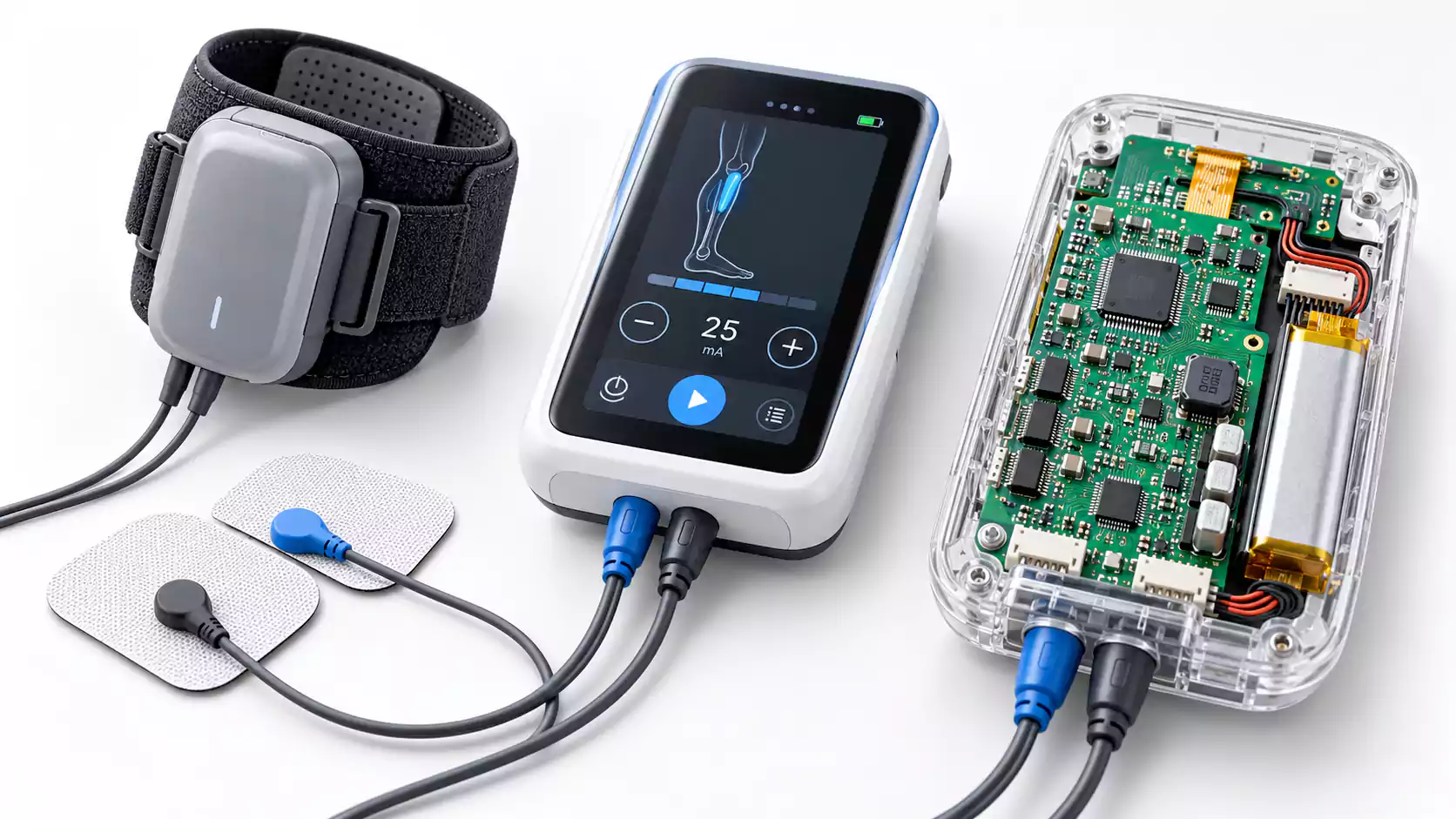
A brain-computer interface for stroke rehabilitation detects brain activity linked to movement intentions and turns it into feedback, such as functional electrical stimulation (FES), robotic assistance, or visual cues.
For stroke survivors with limited hand or arm movement, this approach allows rehabilitation training to begin with attempted or imagined movements, even when physical movement is difficult.
By combining electroencephalography (EEG), real-time signal processing, and movement-related feedback, BCI rehabilitation aims to support motor recovery through repeated sensorimotor training. Its effectiveness depends on clinical factors, signal quality, and the rehabilitation system's reliability.

1. How Can Brain-Computer Interfaces Help Stroke Rehabilitation?
Stroke can damage neural pathways responsible for voluntary movement, leaving patients with weakness, poor coordination, or paralysis. Hand and upper-limb impairments can make everyday activities such as grasping objects, dressing, and eating difficult.
Traditional rehabilitation relies on repetitive movement training to improve motor function. For patients with severe impairment, generating enough voluntary movement for active practice can be challenging.
BCI rehabilitation connects movement intention with external feedback.
When a patient imagines or attempts to open their affected hand, an EEG-based BCI detects changes in sensorimotor brain activity. The system then uses this information to activate an FES device, robotic orthosis, or visual feedback.
This link between motor intention and sensory feedback supports neuroplasticity, the nervous system's ability to adapt through repeated training.
BCI rehabilitation is also being studied in chronic stroke patients who continue to experience movement limitations months or years after their stroke. Recovery varies with impairment severity, training protocols, and individual patient characteristics.
2. How Does an EEG-Based Brain-Computer Interface Work?
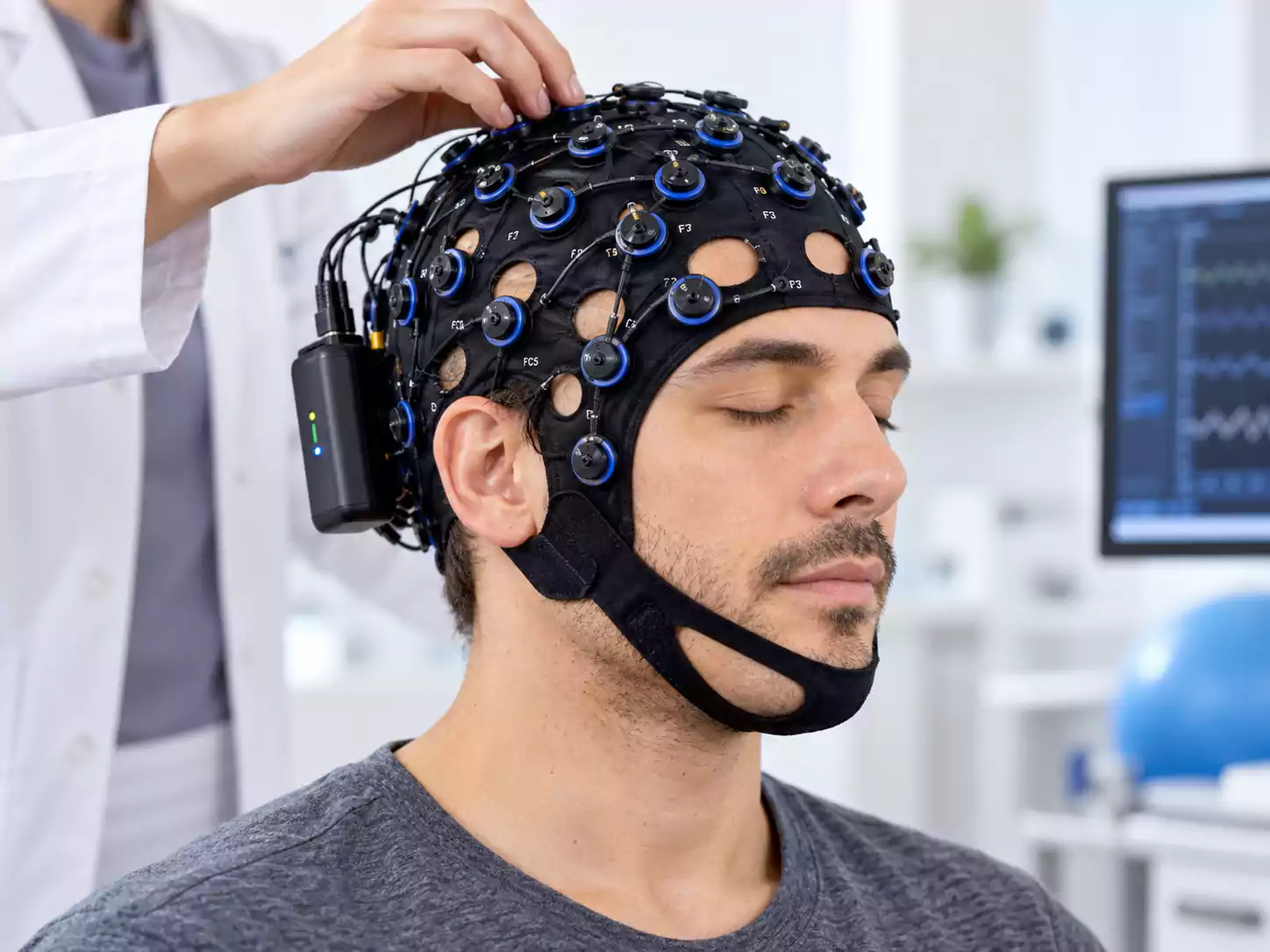
An EEG-based BCI measures electrical activity through electrodes placed on the scalp. Since EEG signals are typically measured in microvolts, reliable acquisition requires sensitive electronics and effective noise control.
A typical EEG-based rehabilitation system involves three stages.
EEG Signal Acquisition
Electrodes placed over sensorimotor brain regions record movement-related activity. For hand rehabilitation, researchers commonly use locations around C3 and C4.
The signals pass through an analog front end (AFE), which amplifies and conditions them before analog-to-digital conversion. Reliable EEG PCB design also depends on low-noise power supplies, input protection, and careful analog circuit layout.
Motor Imagery and Movement Attempt
BCI rehabilitation commonly uses two related tasks:
- Motor imagery: The patient mentally rehearses a movement without physically performing it.
- Movement attempt: The patient tries to move the affected limb, even when little or no visible movement occurs.
These tasks can produce detectable changes in sensorimotor rhythms, including mu and beta activity. Event-related desynchronization (ERD) is a frequently studied signal feature in motor-imagery BCIs.
Motor Intention Detection
A processing system filters EEG data, extracts relevant features, and uses a decoding algorithm to identify movement-related activity.
EEG Electrodes → Signal Conditioning → ADC → Signal Processing → Motor Intention Detection
Since EEG patterns differ across patients and recording sessions, calibration and signal-quality monitoring help maintain consistent detection performance.
3. How Do EEG and FES Work Together in Closed-Loop Rehabilitation?
Functional electrical stimulation (FES) delivers controlled electrical pulses through electrodes to activate peripheral motor nerves and produce muscle contractions.
In stroke rehabilitation, FES can assist movements such as wrist extension or hand opening. When combined with EEG-based BCI, the system can trigger stimulation based on the patient's detected motor intention.
How the EEG-FES Rehabilitation Process Works
- Motor intention: The patient imagines or attempts to open the affected hand.
- EEG acquisition: Scalp electrodes capture movement-related brain signals.
- Intent detection: The processing system identifies activity associated with the intended movement.
- FES activation: The controller triggers electrical stimulation when it meets the detection criteria.
- Sensory feedback: Assisted movement produces sensory input that becomes part of repeated rehabilitation training.
This closed-loop process links motor intention to movement-related feedback.

Why Timing Matters
Accurate timing is important in EEG-FES rehabilitation. Delays between detected motor intention and stimulation can reduce how closely the feedback matches the patient's intended action.
System performance therefore depends on reliable classification, predictable processing latency, and coordinated stimulation control.
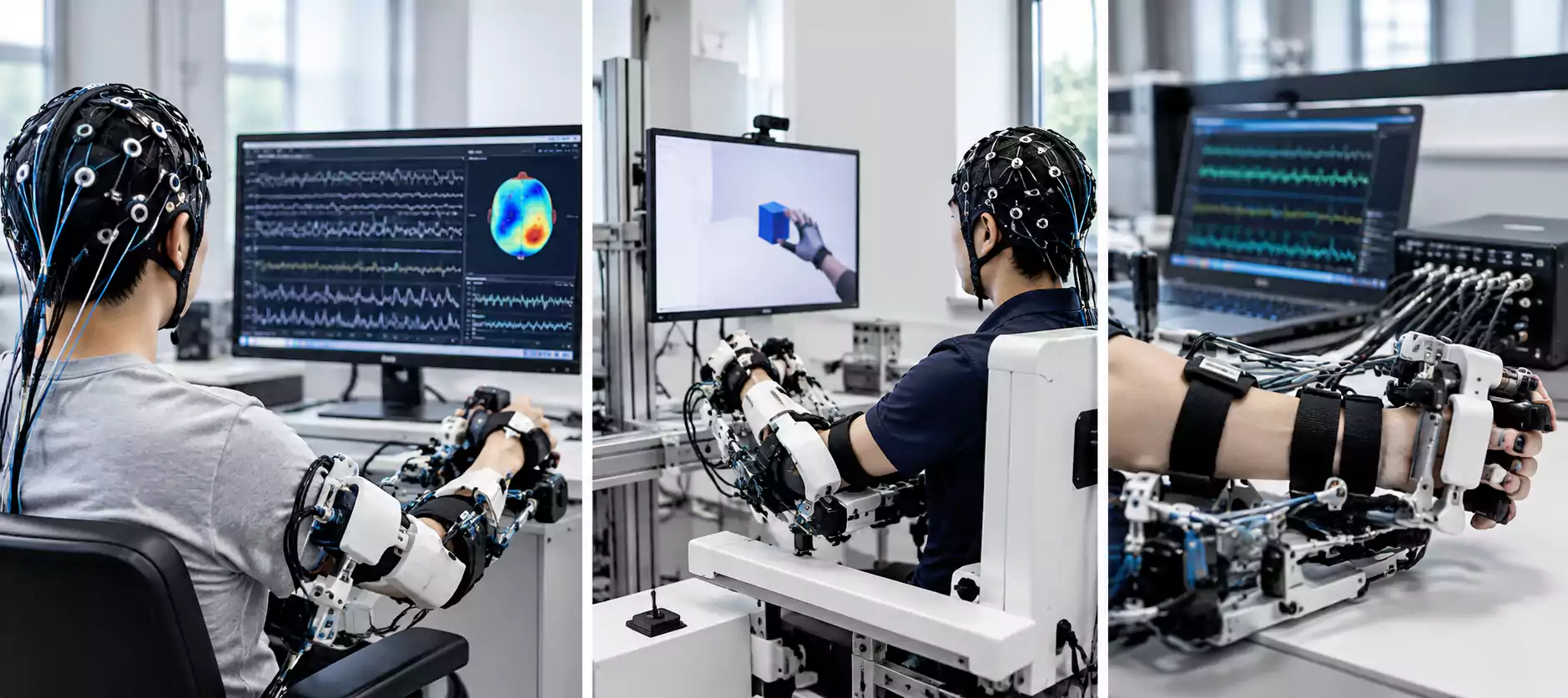
BCI rehabilitation can also use robotic assistance instead of FES. For example, an EEG-controlled hand orthosis can mechanically open or close the patient's hand in response to detected movement intentions.
Both approaches provide movement-related feedback, but their electronic control systems differ.
4. Does BCI Improve Motor Recovery After Stroke?
Clinical research indicates that BCI-assisted rehabilitation can improve upper-limb motor function in some stroke survivors.
A 2026 systematic review published in Frontiers in Neurology analyzed 35 randomized controlled trials involving 1,188 participants.
The review reported a pooled mean difference of 4.55 points on the Fugl-Meyer Assessment–Upper Extremity (FMA-UE) compared with control interventions, with a 95% confidence interval of 2.84–6.25 points.
FMA-UE is a commonly used measure of upper-limb motor impairment after stroke. The reported improvement represents an average across studies; individual responses and clinical significance vary.
Research also indicates that rehabilitation outcomes depend on the comparison treatment, patient characteristics, and training protocol. Long-term effectiveness and optimal treatment parameters remain important areas of investigation.
Real-World BCI Rehabilitation Devices
| Device | Rehabilitation Method | Feedback |
|---|---|---|
| IpsiHand — Neurolutions | EEG detects movement intentions and controls a powered hand orthosis | Mechanically assisted hand movement |
| recoveriX — g.tec | EEG-based motor imagery combined with FES | Muscle stimulation and visual feedback |
The IpsiHand system received FDA De Novo marketing authorization in 2021 for its specified rehabilitation use.
The recoveriX system combines motor-imagery detection with electrical stimulation and visual feedback.
These devices show how different feedback methods can integrate into BCI rehabilitation. Their clinical applications, operating requirements, and regulatory status depend on the specific system.
5. What Are the Main Engineering Challenges in EEG-FES Rehabilitation Devices?
BCI rehabilitation devices must acquire weak EEG signals while managing stimulation outputs, real-time processing, and patient-connected electronics.
Several engineering challenges directly affect system performance.
| Engineering Challenge | Impact on Rehabilitation | Hardware Considerations |
|---|---|---|
| Weak EEG signals | Unreliable motor-intention detection | Low-noise AFE, high input impedance, common-mode rejection |
| Electrode contact and motion artifacts | Signal fluctuations and classification errors | Contact monitoring, electrode stability, cable management |
| FES stimulation artifacts | EEG distortion or amplifier saturation | Input protection, artifact suppression, signal recovery |
| Processing latency | Delayed movement feedback | Sampling, processing, and communication timing |
| Electrical safety | Patient risk from electrical faults | Isolation, stimulation limits, fault detection |
| Wearable size and comfort | Reduced portability and usability | Compact electronics, low power consumption, suitable interconnects |
EEG Noise and Signal Quality
EEG signals are susceptible to muscle activity (EMG), eye movements (EOG), and 50/60 Hz power-line interference.
Reliable acquisition depends on selecting an appropriate analog front end, using stable power supplies, ensuring high common-mode rejection, and designing a careful PCB layout.
Electrode contact quality also matters. Changes in contact impedance and cable movement can introduce artifacts that affect motor-intention detection.
FES Interference and Real-Time Control
FES generates electrical pulses that may couple into nearby EEG acquisition circuits. These stimulation artifacts can temporarily distort measurements or saturate sensitive amplifiers.
Hardware designers can address these challenges through suitable input protection, electrical separation, coordinated acquisition and stimulation timing, and signal-recovery strategies.
End-to-end latency must also be evaluated across acquisition, processing, communication, and feedback activation.
Patient Safety
Patient-connected systems require appropriate electrical isolation, stimulation output limits, and fault protection. Proper patient-connected PCB isolation helps address leakage current, electrical separation, and relevant IEC 60601 requirements.
Medical device developers must also consider applicable IEC 60601-series requirements and verify system safety according to the device's intended use.
6. Key PCB Assemblies in a BCI Rehabilitation System
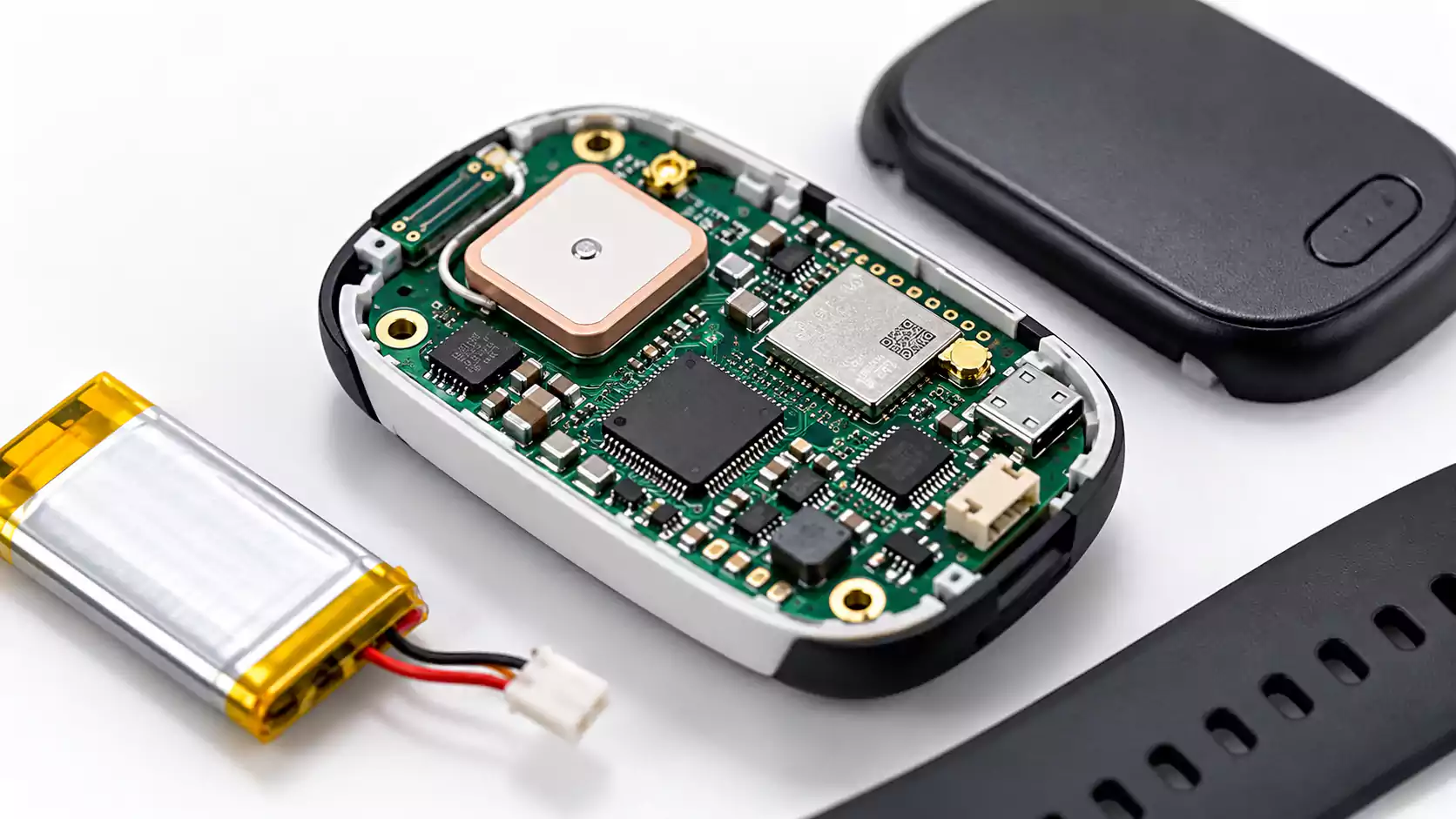
A typical EEG-FES rehabilitation system contains several electronic functions. Depending on device size and architecture, these functions may be integrated into one PCB assembly or distributed across multiple boards.
| PCB Assembly | Main Function |
|---|---|
| EEG Acquisition PCB | Amplifies, conditions, and digitizes EEG signals |
| Processing and Control PCB | Processes EEG data, detects motor intention, and manages feedback |
| FES Driver PCB | Controls stimulation pulses and output protection |
| Power Management PCB | Provides stable power and appropriate isolation |
| Communication Interface | Transfers data between acquisition, control, and user-interface modules |
| Optional Motor Control PCB | Drives robotic assistance and processes movement feedback |
Each module has different design priorities.
The EEG acquisition section requires low-noise performance and stable signal conditioning. The FES driver focuses on controlled electrical output, protection, and reliable activation. Processing electronics must maintain data integrity and predictable timing.
For compact or wearable rehabilitation devices, HDI, flexible PCB, and rigid-flex PCB technologies can support high-density routing and mechanical integration when the design requires them.
PCB architecture should reflect electrode placement, enclosure constraints, stimulation interfaces, power requirements, and manufacturing feasibility.
7. How Are BCI Medical Devices Tested and Manufactured?
Moving from a working research prototype to repeatable medical device production requires consistent electronic performance, documented testing, and manufacturing traceability.
Functional Testing
Testing should address both individual PCB assemblies and the complete rehabilitation system.
- EEG acquisition: Channel gain, input noise, sampling accuracy, and signal consistency.
- FES output: Stimulation pulse parameters, output limits, and fault protection.
- Closed-loop operation: Intent-detection response, feedback activation, and end-to-end latency.
- System interfaces: Communication reliability, power stability, and error handling.
Testing with controlled electrical signals and representative loads helps engineers identify hardware problems before system-level evaluation.
Manufacturing and Traceability
Consistent medical device PCB assembly requires controlled component sourcing, assembly inspection, revision management, and production records.
Traceability can connect PCB revisions, component lots, firmware versions, inspection results, and functional test data.
For medical device OEMs, these controls support a structured transition from Prototype → NPI → Pilot Production → Repeat Production.
An ISO 13485 quality management system supports consistent manufacturing processes, while device-specific verification and validation establish whether the finished system meets its intended requirements.
Frequently Asked Questions
Can BCI help patients recover movement years after a stroke?
Studies involving chronic stroke patients suggest that BCI-assisted rehabilitation can improve upper-limb motor function in some individuals. Results depend on patient characteristics, impairment severity, and rehabilitation protocols.
How does EEG-based BCI activate functional electrical stimulation?
EEG electrodes detect movement-related brain activity. A processing system identifies the intended movement and sends a command to the FES controller, which delivers controlled electrical pulses to activate selected muscles.
Does BCI stroke rehabilitation require brain surgery?
EEG-based BCI rehabilitation uses electrodes placed on the scalp and does not require brain implantation. Other BCI technologies use implanted electrodes, but researchers have widely studied noninvasive systems for stroke rehabilitation.
Can BCI rehabilitation devices be used at home?
Some BCI rehabilitation devices are designed for home-based training. Their suitability depends on the device's intended use, patient eligibility, safety features, and the clinical support required for training.
Conclusion
Brain-computer interfaces support stroke rehabilitation by linking motor intention to electrical stimulation, robotic assistance, or other feedback. Their clinical potential depends on effective rehabilitation protocols and reliable electronics for EEG acquisition, real-time control, and patient safety.
MULTI PCB provides PCB fabrication, component sourcing, and PCBA services for medical electronics, supporting hardware development from prototypes through production.
